
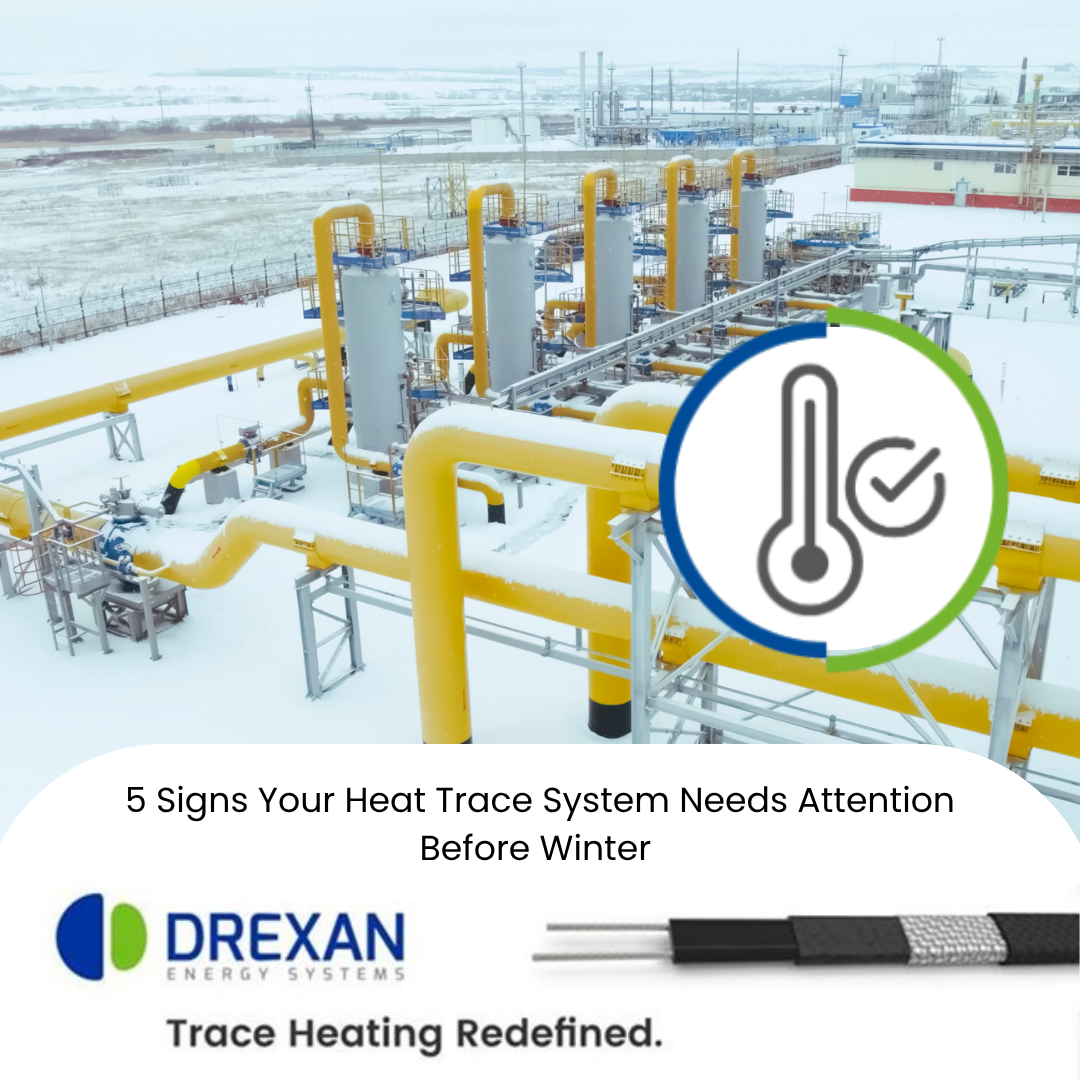
When temperatures drop, is your heat trace system ready to perform?
For industrial facilities, heat tracing can protect critical piping, valves, instrumentation and process systems from freezing or maintain the temperatures required for reliable operation. Having a heat trace system installed doesn’t mean it is ready for another winter.
Heat trace systems operate in demanding environments. Exposure to weather, maintenance activities, mechanical damage, changes to insulation and years of service can all affect performance. As a result, the best time to discover a problem isn’t during the first cold snap, it’s before winter arrives.
Here are five important signs your heat trace system deserves a closer look.
- Has Your Insulation Been Damaged or Removed?
Walk through your facility and look at the condition of the insulation surrounding heat-traced piping.
Is insulation missing? Are jackets damaged? Have sections been removed during maintenance and not properly replaced? Are there signs of moisture getting into the insulation?
Heat tracing and insulation work together. Even a properly operating heating cable may struggle to maintain the required temperature when insulation has been compromised.
Pay particular attention to valves, flanges, pipe supports and other areas where insulation may have been removed for maintenance.
Has anything changed since this heat trace system was originally designed? Changes to insulation thickness, type or condition can affect the heat-loss calculation on which the original system was based.
- Are You Seeing Signs of Physical Damage?
Industrial facilities are constantly changing. Equipment is serviced, piping is modified and contractors work around existing systems.
Heating cable can potentially be damaged during these activities without anyone realizing it.
Look for visible damage to cable, connection kits, junction boxes, end seals and power connections. Also watch for areas where cable may have been crushed, cut, excessively bent or exposed following other maintenance work.
Not all damage will be visible, which is why electrical testing should also be part of a pre-winter inspection program.
A system that appears fine from the outside may still have an electrical issue that prevents it from performing as intended.
- Are Your Electrical Test Results Telling You Something?
When was the last time your heat trace circuits were tested? Testing before winter can help identify problems while there is still time to address them.
Insulation resistance testing is an important part of evaluating the integrity of a heat trace circuit. Drexan recommends performing megger testing according to the applicable installation and maintenance procedures and documenting the results so they can be compared over time.
Don’t look at testing simply as a pass-or-fail exercise.
Are readings changing from previous inspections?
Maintaining records can help your maintenance team identify deterioration or unusual changes before they become system failures.
A documented testing program also gives you a much clearer picture of the condition of your heat trace assets across the facility.
- Have Your Process or Operating Conditions Changed?
A heat trace system is designed around specific operating conditions. Ask yourself if those conditions are still the same?
Perhaps a process temperature has changed. A pipe has been replaced. Insulation has been upgraded or modified. A line that previously operated continuously is now shut down periodically. Or an area that once had relatively little exposure is now more vulnerable to cold temperatures. All of these are continuous issues faced by facility managers.
Even relatively small changes can alter heat-loss requirements. This is particularly important for process temperature maintenance applications, where the objective isn’t simply preventing a pipe from freezing. The heat trace system needs to maintain the required process temperature under the facility’s actual operating conditions.
If your process has changed, it may be worth asking whether your heat trace design should change with it.
- Are You Relying on a System That Hasn’t Been Inspected in Years?
Heat trace is often one of those systems that receives little attention when it is working. That’s understandable but if you don’t know when a circuit was last inspected, tested or documented, that alone may be a reason to take a closer look.
Older systems aren’t necessarily unreliable. But years of maintenance activity, weather exposure, insulation changes and equipment modifications can create conditions that didn’t exist when the system was originally installed.
A pre-winter review gives facility teams an opportunity to identify those issues before cold weather turns a small maintenance problem into an operational one.
Don’t Wait for Winter to Test Your Heat Trace System
Do you know if your trace heating system will perform as designed when you need it most? Taking time to inspect cable, insulation and connections, review electrical test results and confirm that operating conditions haven’t changed can help reduce the risk of frozen piping, sprinklers, process interruptions and emergency winter repairs.
If you’re unsure about the condition of an existing system, you don’t have to figure it out alone. At Drexan Energy Systems, technical support is an important part of how we approach trace heating. Our team can help you evaluate existing applications, review system requirements, and determine whether changes or upgrades should be considered before temperatures drop.
Is your facility ready for winter?
Talk to Drexan about your heat trace system before the cold weather arrives.
Trace Heating Redefined.