
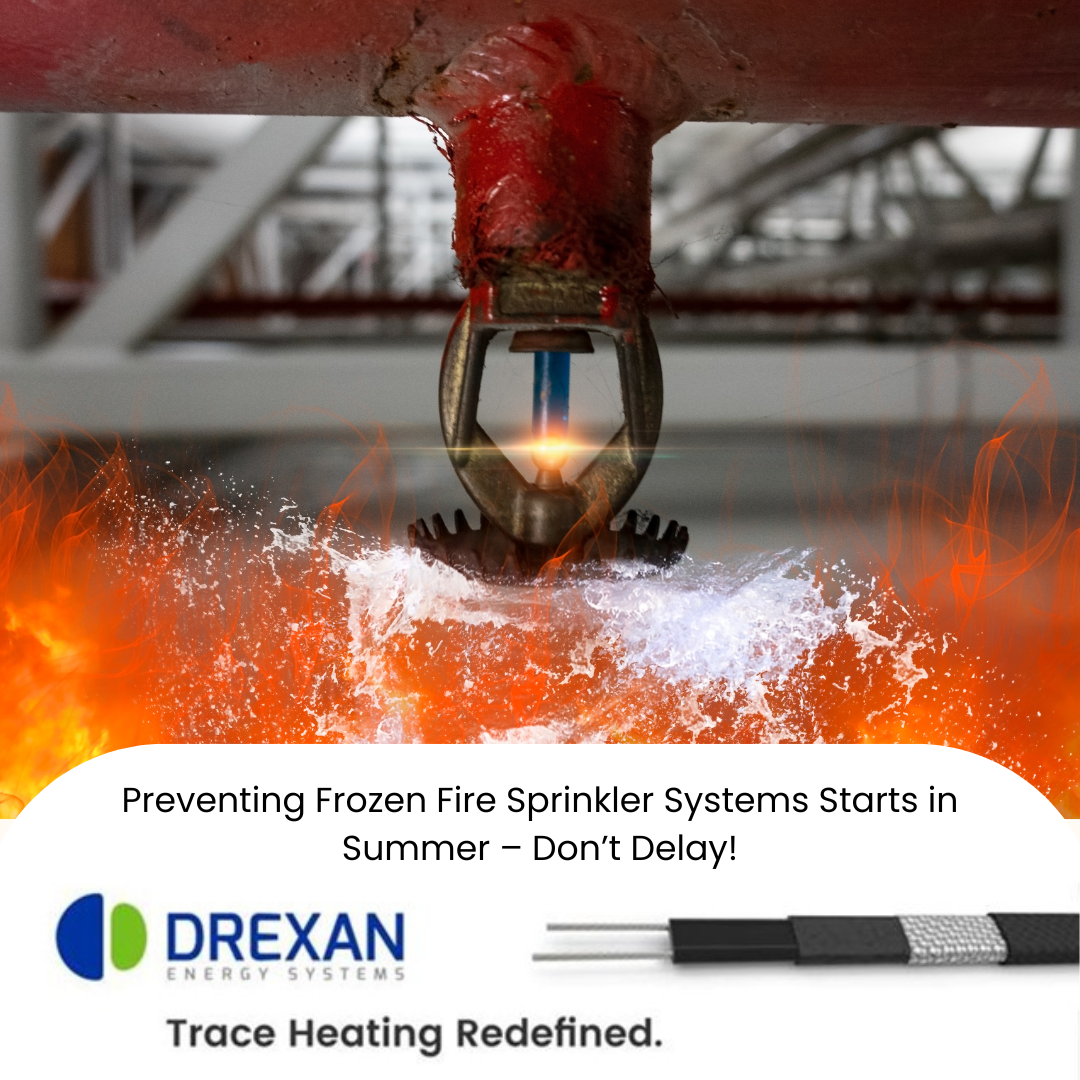
When temperatures are warm and freezing conditions seem months away, fire sprinkler freeze protection may not be top of mind. But waiting until the first cold snap to discover a problem leaves little time to correct and make repairs.
A frozen fire sprinkler system isn’t simply an inconvenience. Freezing can damage piping and components, cause costly water damage when pipes rupture or thaw, and, most importantly, compromise a building’s fire protection system when it is needed.
For facility managers, building owners, engineers, and contractors, summer provides an important opportunity to inspect existing systems, identify vulnerable areas, and address potential freeze protection issues before temperatures begin to fall.
Is Your Fire Sprinkler System Really Ready for Winter?
Even buildings that have operated successfully through previous winters can develop vulnerabilities. Buildings change. Insulation can deteriorate or be disturbed. Renovations can alter heated spaces. Doors, louvers, and ventilation systems can change exposure conditions. Heat tracing cables, controls, connections, or insulation can also be damaged over time.
That’s why one of the most important questions to ask during the warmer months is if temperatures dropped below freezing tomorrow, are you confident every vulnerable section of your fire sprinkler system would remain protected?
If the answer isn’t an immediate yes, summer is the time to investigate.
Where Are the Vulnerable Areas of Your Sprinkler System?
Start by identifying sprinkler piping located in or passing through areas susceptible to freezing. Depending on the building, these may include:
- Unheated warehouses and storage areas
- Parking garages
- Loading docks
- Attics and ceiling spaces
- Vestibules and entrance areas
- Mechanical rooms
- Exterior walls
- Areas near overhead doors
- Piping exposed to outdoor temperatures
- Spaces affected by drafts or inadequate insulation.
It’s also important to look beyond obvious exterior exposure. A pipe doesn’t need to be outdoors to be vulnerable. Localized cold spots within a building can expose sprinkler piping to freezing conditions even when surrounding areas are heated.
Has Anything Changed Since Last Winter?
A summer inspection shouldn’t simply confirm that heat tracing is present. It should consider important questions such as:
- Has construction or renovation taken place?
- Has insulation been removed or replaced?
- Have sections of sprinkler piping been modified or extended?
- Have operating conditions within the building changed?
- Have there been problems with doors, heating systems, ventilation, or building envelope performance?
Even relatively small changes can affect the conditions surrounding sprinkler piping.
This is one of the reasons seasonal inspection matters. Freeze protection should reflect how the building operates today, not how it operated when the system was originally installed.
Is the Existing Heat Trace System Performing as Designed?
The presence of heat trace cable doesn’t necessarily mean the system is providing adequate freeze protection. Summer maintenance provides an opportunity to evaluate the complete heat tracing system, including the heating cable, connection system, controls, power supply, insulation, and installation.
When assessing the current system, ask yourself:
- Is the heating cable still properly attached to the piping?
- Are connection points and terminations secure and protected?
- Has the cable jacket been damaged?
- Are controls and sensors operating correctly?
- Is the insulation complete, dry, and in good condition?
- Has the system been electrically tested?
- Does the installed system still meet the requirements of the application?
A sprinkler heat tracing system is only as reliable as its installation and ongoing condition.
Why Does Heat Trace Cable Performance Matter?
When designing or evaluating freeze protection, engineers need confidence that the heating cable will deliver the wattage required by the design.
Drexan self-regulating heat tracing cables are manufactured to tight performance tolerances of -0/+10%.
Why does that matter?
Because predictable cable performance helps engineers design systems around the actual heat required by the application rather than compensating for large variations in cable output.
For fire sprinkler freeze protection, where reliability matters, consistency isn’t simply a manufacturing specification. It provides greater confidence that the installed system will perform as intended when temperatures fall.
Don’t Forget the Connections
Heating cable receives much of the attention in a heat tracing system, but connections are equally important.
A reliable sprinkler freeze protection system depends on properly installed power connections, splices, tees, and end terminations that can withstand the environment in which they operate.
Drexan’s AMIGA connection system is designed to simplify installation while providing durable environmental protection. Its NEMA 4 construction and ability to be installed at temperatures as low as -40°C provide flexibility for contractors working in demanding conditions.
Planning and inspecting these systems during summer means contractors aren’t forced to perform corrective work under the same freezing conditions they’re trying to protect against.
Are You Waiting for Winter to Find the Weak Point?
That’s ultimately the question facility managers should be asking. The worst time to discover inadequate sprinkler freeze protection is during an extended period of freezing weather.
By then, contractors may be busy responding to emergencies, access conditions may be more difficult, and a facility may already be dealing with frozen piping or damage.
Summer provides time to take a more proactive approach to inspect, test, evaluate and correct.
If deficiencies are discovered, there is time to engineer a solution, obtain the appropriate materials, schedule contractors, and complete the work before freezing temperatures arrive.
Freeze Protection Should Be Preventative, Not Reactive
Fire sprinkler systems are an essential part of a building’s life-safety infrastructure. Protecting vulnerable piping from freezing deserves the same preventative mindset applied to other critical building systems.
Don’t wait for a cold-weather emergency to determine whether your heat tracing system is doing its job.
Drexan works with engineers, contractors, and facility professionals across North America to develop reliable heat tracing solutions for fire sprinkler freeze protection and other critical applications.
Summer is the time to prepare. Winter is when your system needs to perform.
Contact Drexan to discuss your fire sprinkler freeze protection requirements or to evaluate the right heat tracing solution for your application.
Download our Fire Sprinkler Freeze Protection Design/Install Guide.
Trace Heating Redefined.