
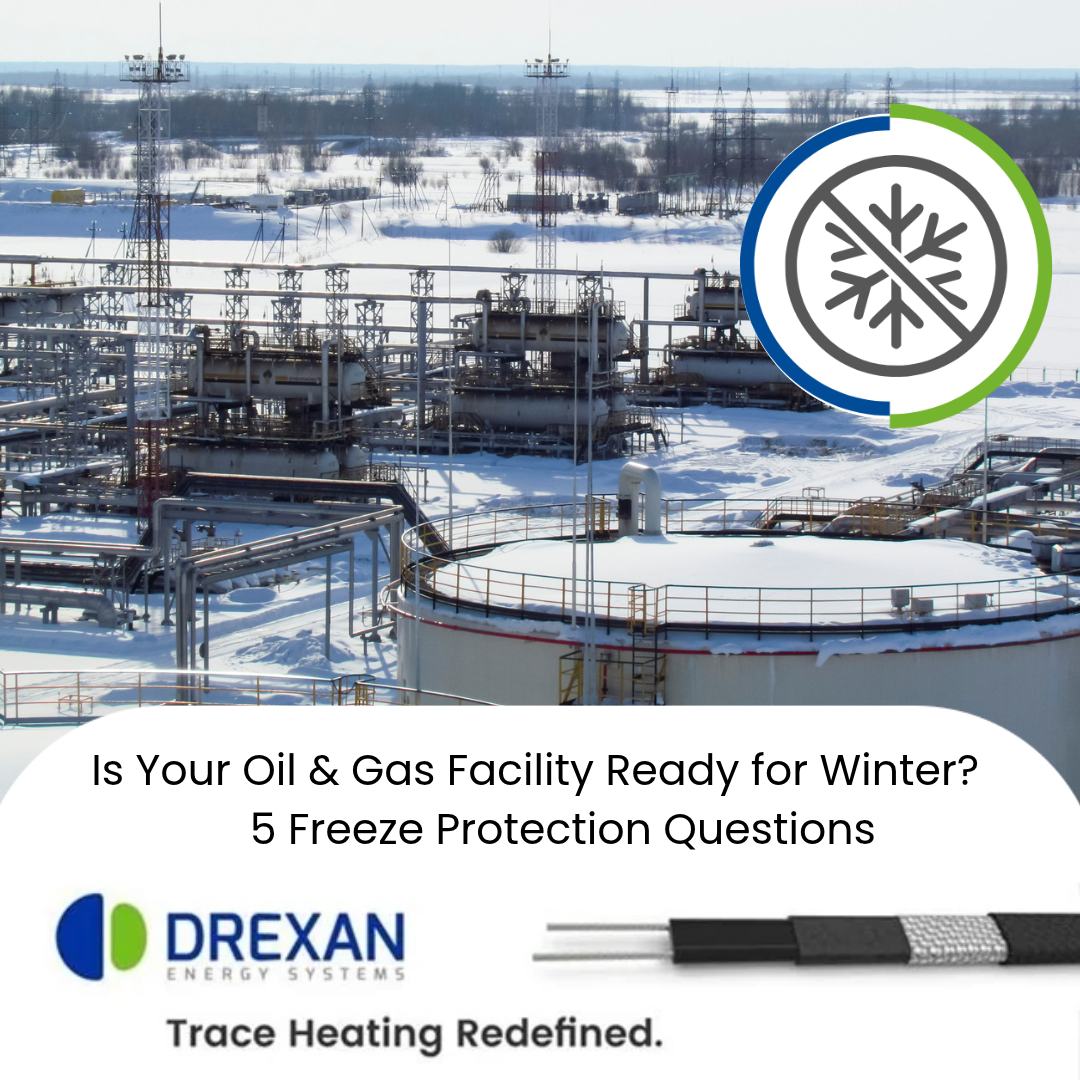
As temperatures begin to drop, oil and gas facility managers need to ensure infrastructure is prepared to operate safely and reliably throughout the winter.
In oil and gas operations, freezing temperatures can create significant challenges. From exposed process piping and instrumentation to valves, pumps and critical safety systems, inadequate freeze protection can result in equipment damage, unplanned shutdowns, costly maintenance and operational disruptions.
The challenge isn’t simply keeping equipment warm. It’s identifying potential vulnerabilities before they become problems.
At Drexan, we believe effective freeze protection begins with proactive planning, reliable trace heating technology and the technical expertise to support the entire system.
Here are five important questions facility managers should be asking as winter approaches.
- Have You Identified All Critical Freeze Protection Applications?
Not every vulnerable component is immediately obvious. While major process lines often receive the most attention, smaller components can present equally significant risks during extreme cold. Consider:
- Instrumentation, impulse lines and sampling systems
- Valves, pumps and manifolds
- Drain lines and condensate systems
- Tank connections and loading facilities
- Fire protection piping and associated equipment
- Remote or exposed piping installations.
Even a small section of unprotected piping can create operational challenges.
- Have Existing Trace Heating Systems Been Inspected and Tested?
A trace heating system that performed reliably last winter shouldn’t automatically be assumed ready for the next.
Exposure to moisture, damaged insulation, compromised electrical connections and routine maintenance activities can affect system performance.
A proactive inspection program should include:
- Visual inspection of heating cables and connection components
- Verification of electrical circuit integrity and insulation resistance
- Inspection of thermal insulation and weatherproofing
- Testing of temperature controls, sensors and alarms
- Review of system documentation and maintenance records.
Testing should follow the manufacturer’s instructions and applicable site safety procedures.
- Are Small Components Creating Big Risks?
Some of the most challenging freeze protection problems occur in areas that receive relatively little attention.
Small-diameter tubing, instrument lines, exposed valves and dead legs can be particularly susceptible to freezing because of their size, location or operating conditions.
In oil and gas facilities, these components may be essential for process monitoring, control and safe operation.
A frozen instrument line, for example, can compromise the accuracy of critical measurements or interfere with process control.
- Are Your Electrical Connections Appropriate for Hazardous Locations?
Oil and gas facilities frequently operate in environments where electrical equipment must meet stringent safety and certification requirements. Trace heating systems are no exception.
Connection systems, heating cables, controls and associated components must be suitable for the applicable hazardous-area classification and installed in accordance with relevant codes and approvals.
Drexan’s innovative AMIGA connection system is engineered to simplify installation while supporting demanding industrial trace heating applications. Appropriate AMIGA configurations are available for designated hazardous locations.
By reducing unnecessary installation complexity and providing dependable connections, well-designed systems can help contractors work more efficiently while maintaining critical safety requirements.
- Could Summer Maintenance Have Compromised Winter Readiness?
Facility modifications, maintenance shutdowns and equipment replacements can introduce unexpected freeze protection vulnerabilities.
Thermal insulation may have been removed and improperly replaced. Instruments may have been relocated. Piping modifications may have changed heat loss requirements or affected existing trace heating circuits. These changes can go unnoticed until temperatures fall.
Including trace heating verification in maintenance completion procedures and management-of-change reviews can help prevent avoidable winter problems.
Freeze Protection Redefined: Why Being Proactive Matters
For oil and gas facility managers, winter readiness isn’t simply another seasonal maintenance activity. It’s an important part of protecting infrastructure, maintaining production continuity and managing operational risk.
Reliable freeze protection depends on the performance of the entire trace heating system, including heating cables, connection systems, controls, thermal insulation, engineering design and ongoing maintenance. It also depends on having knowledgeable partners who understand the challenges of operating in demanding industrial environments.
At Drexan, we’re redefining freeze protection by combining innovative trace heating technology, stringent manufacturing standards, dependable system components and experienced technical support.
Our focus extends beyond supplying products. We help engineers, contractors and facility managers make informed decisions that support reliable installations and long-term system performance.
The best time to solve a freeze protection problem is before it happens.
Explore Drexan’s petrochemical trace heating solutions, engineering resources, and technical support.
Trace Heating Redefined